Postnatal Hair Loss Treatment
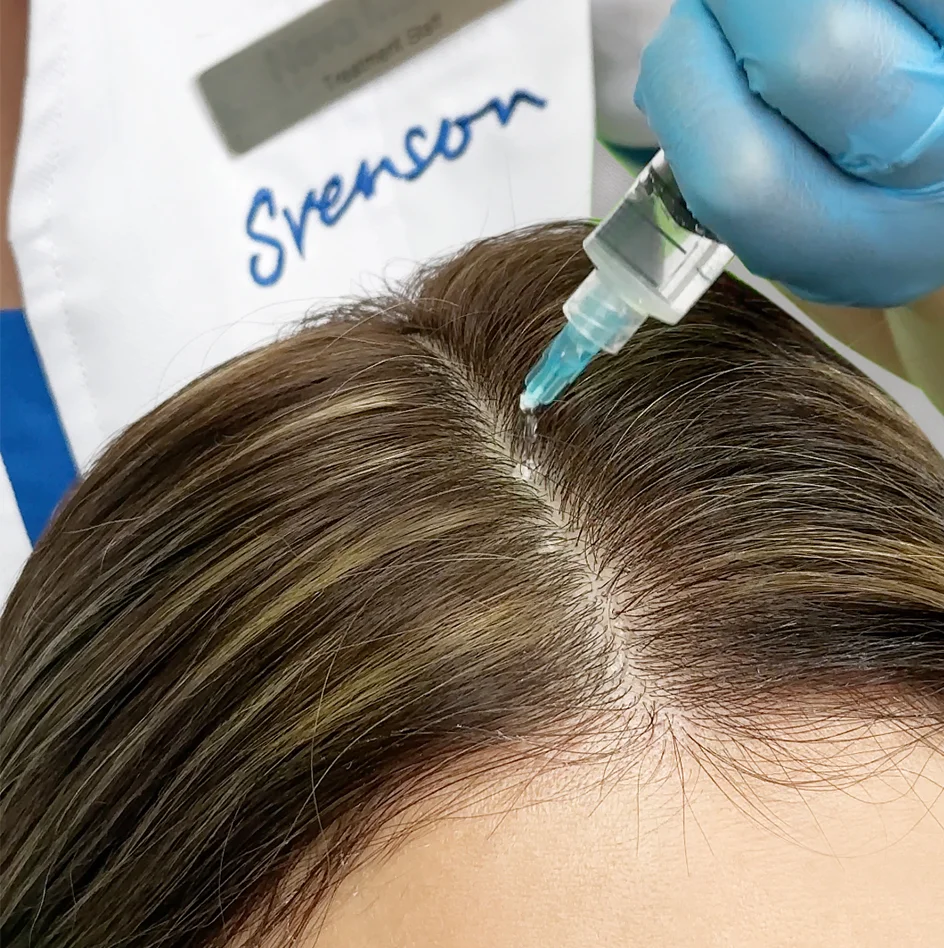
After giving birth, many women experience a shedding of hair retained during pregnancy. Svenson’s hair stimulant treatments are designed to help support new hair growth...
Read MoreIn this blog, we dive into the common and uncommon symptoms of dandruff. That way, you’re able to immediately address those pesky white flakes and take preventative measures for a healthier scalp.
While there are several identified causes of dandruff, it mainly happens when the normal shedding cycle of the scalp skin cells gets disrupted. Instead of shedding slowly and unnoticed, the skin cells turnover rapidly—forcing them to clump together and form visible flakes.
Several factors contribute to this condition including dry or oily scalp, sensitive scalp, and an overgrowth of the Malassezia yeast. If you’re suffering from any of these, it can trigger reactions on your skin cells, leading to dandruff formation.

Having dandruff often has a series of telltale signs. The usual symptoms to look out for are:

The most recognizable sign of dandruff is the presence of yellowish or white flakes on your scalp, hair, and shoulders. They usually vary in size ranging from fine and powdery flakes to larger and more noticeable dandruff.
Having dandruff often goes hand-in-hand with itchy scalps, causing irritation and discomfort. Resist the urge to scratch excessively as this can worsen the condition and lead to inflammation.
Dandruff can sometimes trigger swelling and redness of the scalp. This happens as a result of constant scratching or due to an underlying inflammatory response to dandruff-causing fungi. Typically, you can find these irritations on your hairline and near the ears.
Dandruff often causes the scalp to become dry and tight, especially in areas with flakes. This dryness can contribute to further itching, discomfort, and sensitivity.
Contrary to popular belief, oily hair is also prone to dandruff because of the scalp’s sebum clogging. In this case, the flakes might just appear greasy and clumpy instead of dry and powdery. This can be confusing at times, but the underlying cause is the same—which is due to rapid skin cell turnover.


Since psoriasis and dandruff both have similar manifestations on the scalp (dryness and flakes), they’re often confused with each other. The main difference between scalp psoriasis and dandruff is that psoriasis presents more severe symptoms such as itchy and burning skin, plaques, and even bleeding. When you’re suffering from an extreme case of psoriasis, you may require medication to treat it.
Dandruff can present in different ways for different people, which is why there are common dandruff myths. So, to debunk them, here are some of the less frequent ways dandruff can manifest:

While it’s not a direct cause, dandruff can sometimes be accompanied by increased hair shedding. This can be due to scalp irritation affecting the hair follicles or the emotional stress associated with dandruff. However, significant hair loss wouldn’t be typical of dandruff alone. If you notice a drastic loss of hair, it’s best to consult with your dermatologist.
Babies aren’t totally immune to scalp issues either. Cradle cap is a form of seborrheic dermatitis that can affect infants, causing the same crusty and yellow patches on the scalp. This typically clears up on its own within a few months but can sometimes resemble dandruff.
Generally, dandruff affects the entire scalp. However, it can be present in specific areas of your head. This can be due to factors like uneven oil distribution or irritation from hair products, leading to an isolated form of dandruff.
Dandruff can sometimes make you feel a burning or tingling sensation on your head. This can be due to overly sensitive scalps and can lead to pain and inflammation.
If you experience any of these uncommon symptoms, especially persistent hair loss or severe scalp inflammation, it’s crucial to consult with your doctor for proper diagnosis and treatment. Like most conditions, early intervention can help manage the condition effectively.


Dandruff symptoms can vary widely from person to person and not everyone experiences the same set of symptoms. By understanding the signs associated with this dermatological issue, you can take proactive steps to manage your scalp health and enjoy flake-free, gorgeous hair.
Some of the ways you can treat your dandruff are:
If you want to ensure a healthy and dandruff-free scalp, consider consulting with Svenson’s expert trichologists. We understand the frustrations and embarrassment that dandruff can cause. So, to help you achieve a healthy scalp, our doctors will assess your hair and recommend personalized solutions. We guide you through effective dandruff prevention tips to promote your hair wellness.
Let Svenson be your hair care partners! Learn more about our services and book a consultation today.
Your email address will not be published. Required fields are marked *