What causes your hair to go brittle?
- Excessive heat styling
- Chemical processing
- Environmental exposure
- Improper hair care routine
- Nutritional deficiencies and health issues
Overview
- Heat styling, chemical treatments, environmental exposure, improper care routines, and nutritional imbalances can all contribute to hair becoming dry, weak, and more prone to breakage.
- Understanding the causes of brittle hair can help you better recognize what may be weakening your strands and when professional guidance may help improve your overall hair condition.
Your hair is part of your everyday routine, from styling it before going out to simply running your fingers through it during the day. That’s why changes like rough texture, dullness, breakage, or strands snapping more easily can feel frustrating and hard to ignore. When your hair no longer feels as smooth, soft, or manageable as it used to, it may already be developing brittleness.
This does not always mean you are doing something wrong. Knowing what causes your hair to go brittle can help you become more aware of the factors that may be gradually weakening your strands before the damage becomes more difficult to manage.
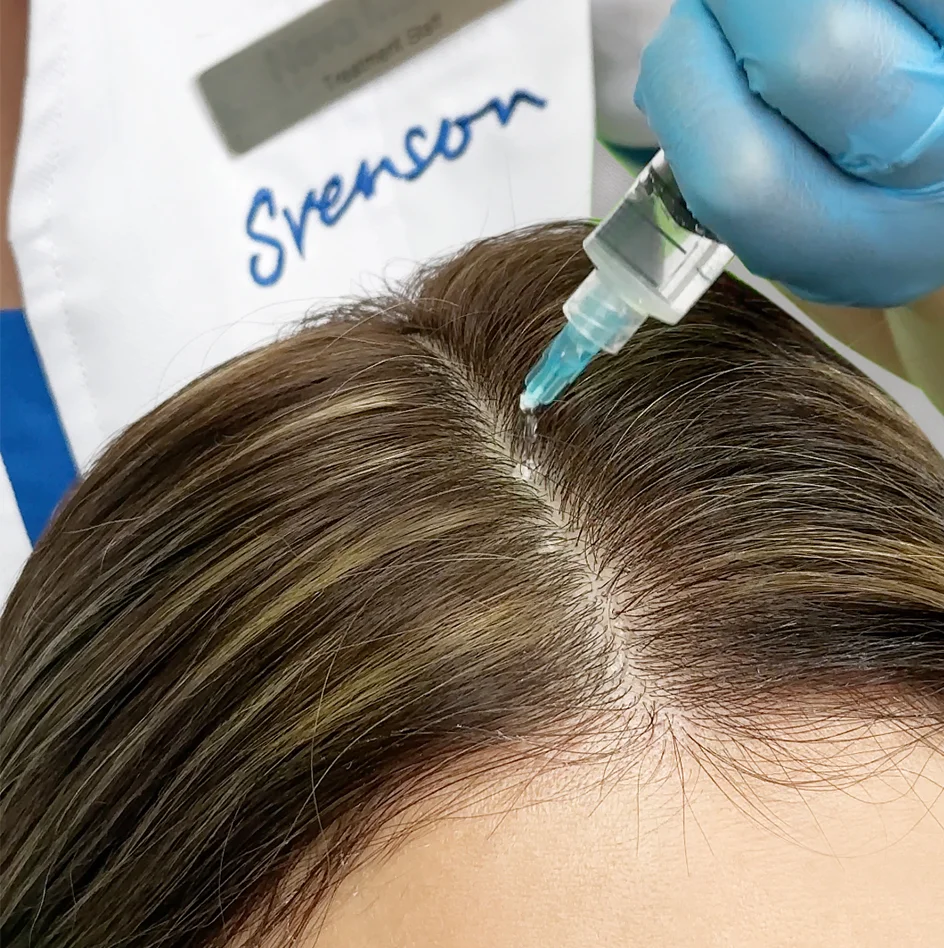
If your hair is starting to feel brittle, Svenson offers personalized treatment solutions tailored to your scalp and hair needs.
Excessive Heat Styling

Sometimes, being presentable means using heat to style your hair, whether it’s blow-drying, straightening, or curling. While effective for styling, high temperatures can gradually affect the hair’s structure. Excessive heat removes natural moisture, leaving strands dry and less flexible.
It can also weaken the cuticle, the hair’s protective outer layer, making strands feel rough and look dull. Over time, this damage contributes to brittleness, where hair becomes more fragile and prone to breakage.
Chemical Processing
Bleaching, coloring, relaxing, rebonding, perming, and other chemical services are often part of changing or maintaining your look, especially when you want a certain style or finish. However, these processes can gradually affect how your hair feels and behaves.
They work by altering the hair’s natural structure, including the protein bonds that give strands strength and elasticity. When these bonds are repeatedly broken or weakened, the hair can lose moisture more easily, becoming drier, more porous, and less smooth to the touch. If your hair feels weaker after repeated treatments, it may be time to pause chemical services and focus on repair, hydration, and professional care.
Environmental Exposure
Commuting, running errands, or simply spending time outdoors under the sun are all part of everyday life. However, constant exposure to sunlight, wind, humidity, and pollution can gradually affect your hair’s condition.
UV rays from the sun can break down the hair’s natural proteins and weaken its protective outer layer, making strands more prone to dryness and loss of strength. At the same time, environmental buildup from dust and pollution can settle on the scalp and hair, disrupting its natural balance. Together, these factors can leave hair feeling rough, dry, and more fragile, contributing to brittleness.
Improper Hair Care Routine
An improper hair care routine can make hair more fragile by putting unnecessary stress on the strands and weakening their structure. This includes rubbing shampoo along the full length of the hair, aggressive brushing, rough towel-drying, tight hairstyles that pull on the roots, skipping conditioner, or using heavy products that lead to buildup. When these habits are repeated, the hair becomes more prone to dryness, weakness, and breakage, which contribute to brittleness.
Nutritional Deficiencies and Health Issues
Hair strength can also be affected by factors within the body. Poor nutrition, restrictive diets, low protein intake, vitamin or mineral deficiencies, stress, thyroid concerns, and other health issues may contribute to hair that looks weaker or increased shedding.
Since hair is made mainly of protein and relies on nutrients delivered through the bloodstream, any imbalance in diet can directly affect its structure and growth. If brittleness occurs with sudden shedding, thinning, fatigue, or scalp changes, it is best to seek professional evaluation rather than relying solely on products.
Tips to Improve Brittle Hair

Here are tips to help reduce further damage and support stronger-looking hair over time.
- Deep Condition – Use a nourishing conditioner or hair mask regularly to help improve softness, moisture, and manageability, especially if your hair is dry, brittle, or chemically treated.
- Limit Heat – Reduce heat styling when possible, use lower heat settings, and avoid using hot tools on wet hair.
- Get Regular Trims – Trimming split ends can help prevent damage from traveling farther up the strand, making the hair look thinner or more uneven.
- Be Gentle – Use a wide-tooth comb, avoid aggressive towel-drying, loosen tight hairstyles, and handle wet hair carefully, as it can be more fragile.
Key Takeaway
Spotting what causes your hair to become brittle helps you identify everyday habits and underlying factors that may be gradually weakening it, so you can respond to changes before dryness, breakage, and weakness become more difficult to manage. Consistent care and expert guidance can help support healthier-looking hair and improve overall resilience.
If your hair feels brittle, dry, weak, or difficult to manage, Svenson Philippines can help you better understand what your hair and scalp may need. Our trichologists can assess your condition and recommend a personalized care plan to help support stronger, healthier-looking hair. Love your hair, book now!